

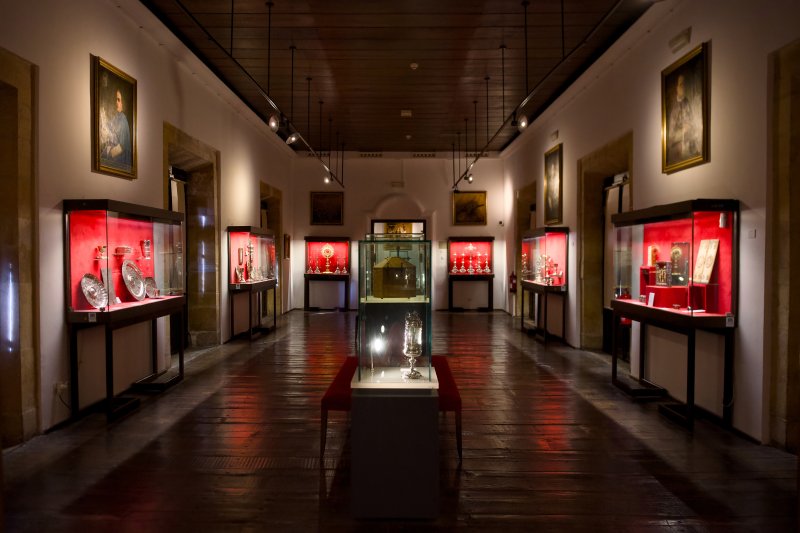
The management of temperature and humidity in museum spaces is now at the center of an increasingly urgent reflection. The article “Climatisation et hygrométrie: les musées ne sont pas neutres”, published in L’Hebdo du Quotidien de l’Art and shared by ICOM France, emphasizes how the climatic standards applied to museums must evolve to meet contemporary environmental challenges, without compromising the preservation of artworks.
For decades, the protection of cultural heritage has relied on rigid and standardized climatic parameters. Today, however, the climate emergency and the high energy consumption of traditional air conditioning systems demand a paradigm shift: no longer an “absolute” control of the climate, but a more flexible, contextualized, and sustainable management that can limit harmful fluctuations for the artworks.
A new approach: climatic stability instead of forced air conditioning
The program “Prenons le contrôle du climat!”, promoted within ICOM, represents a concrete example of this transition. The goal is to encourage more sober practices adapted to local climatic realities and the characteristics of historic buildings, prioritizing the stability of humidity and temperature over energy-intensive systems that seek to impose constant artificial conditions.It is precisely in this context that the philosophy of Propadyn Museart fits in.
Propadyn Museart is designed to protect artworks from humidity fluctuations, one of the main causes of degradation of sensitive materials such as wood, canvas, paper, and composite materials.
Acting as a humidity stabilizer, Propadyn Museart maintains a stable and controlled hygrometric level, reducing mechanical and chemical stress on the artworks, even in environments subject to climatic variations.
This technology allows to:
Preserve better, consume less
The reflection initiated by ICOM France highlights how the ecological transition of museums also involves technical solutions designed not only for the building but especially for the artworks and their conservation environment.
In this scenario, Propadyn Museart represents a concrete response to the new needs of preventive conservation: protecting artistic heritage from climatic fluctuations, improving the sustainability of museum practices, and contributing to a more responsible balance between protection, environment, and energy.


Propadyn Museart was born in Propagroup laboratories, a society leader in its field that has been working in the market for more than fifty years. Propagroup was born as a distributor of traditional packing products and has continued to evolve since then. Treasuring the experience built up in this field, Propagroup has continued specializing in the field of safety packing, which is suitable for protection of every kind of product under the severest transport and storage conditions.
To find out more about Propagroup and the products it offers visit www.propagroup.com
Via Genova 5/b
10098 Rivoli (Turin) - Italy
Tel. +39 011 9507788
P.IVA 03795670011
Email: export@propagroup.com
www.propagroup.com


